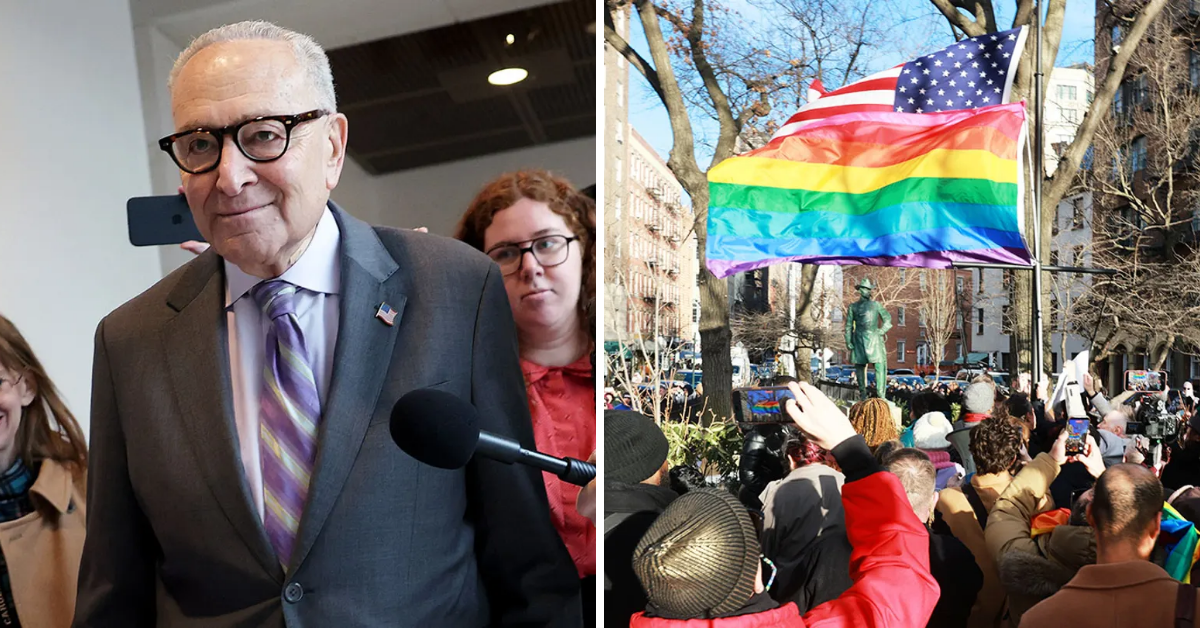
Senate Minority Leader Chuck Schumer has announced plans to introduce legislation that would give the Pride flag formal recognition at the federal level. If passed, the measure would place the Pride flag in the same category as congressionally authorized flags such as the U.S. flag, military flags, and the POW/MIA flag.
Schumer said the goal is to ensure the flag receives consistent protections and cannot be removed from certain federal sites without clear justification.
Removal at Stonewall Sparks Debate
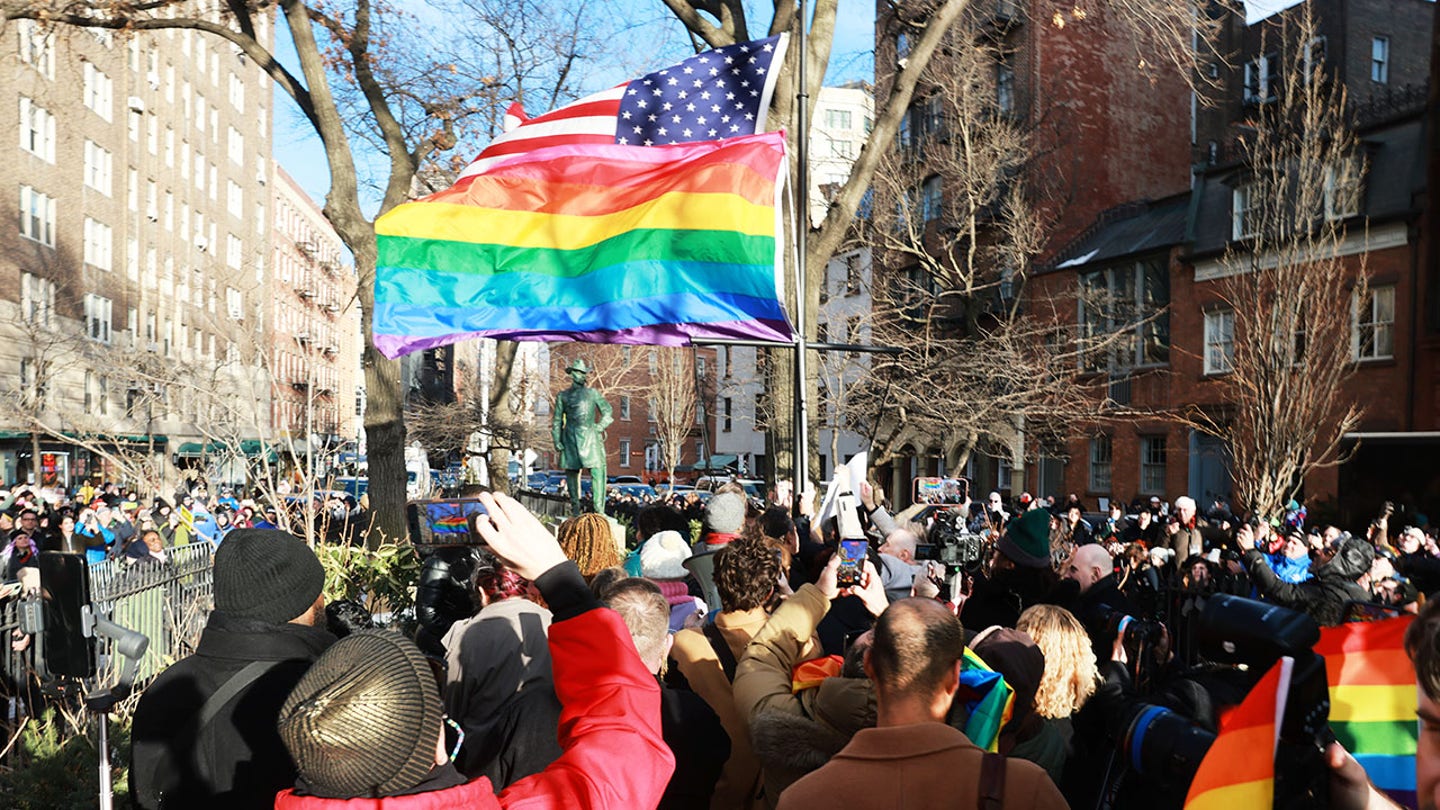
The proposal follows controversy surrounding the Pride flag at the Stonewall National Monument in New York City. Earlier this month, the flag was removed after an internal directive from the Department of the Interior ordered national parks to take down “non-agency” flags.
The memo, signed by National Park Service Acting Director Jessica Bowron, allowed exceptions for historical flags, military flags, and federally recognized tribal flags. The Pride flag was not included in that list.
Stonewall National Monument, designated in 2016 under President Barack Obama, commemorates the 1969 Stonewall uprising. The confrontation between police and patrons at a gay bar in Greenwich Village is widely considered a pivotal moment in the modern LGBTQ rights movement.
Following public reaction, the Pride flag was reinstalled outside the monument.
What the Proposed Bill Would Do
Schumer said his legislation would prevent similar removals in the future by granting the Pride flag congressionally authorized status. According to him, the bill is about protecting what the symbol represents and allowing national parks to maintain local decision-making regarding displays.
He described Stonewall as “sacred ground” and argued that the Pride flag deserves permanent protection at the site.
President Donald Trump has not directly addressed this specific incident. However, he previously signed an executive order outlining which flags may be prominently displayed on federal property, stating that the U.S. flag should remain the primary symbol flown at government facilities.
Political Debate Likely Ahead
The proposal is expected to face debate in Congress. Supporters argue that federal recognition would affirm equal treatment and symbolic representation. Critics may question whether additional flags should receive the same status as long-established national and military symbols.
As lawmakers consider the bill, the discussion highlights broader questions about symbolism, federal authority, and how public spaces reflect American values.